
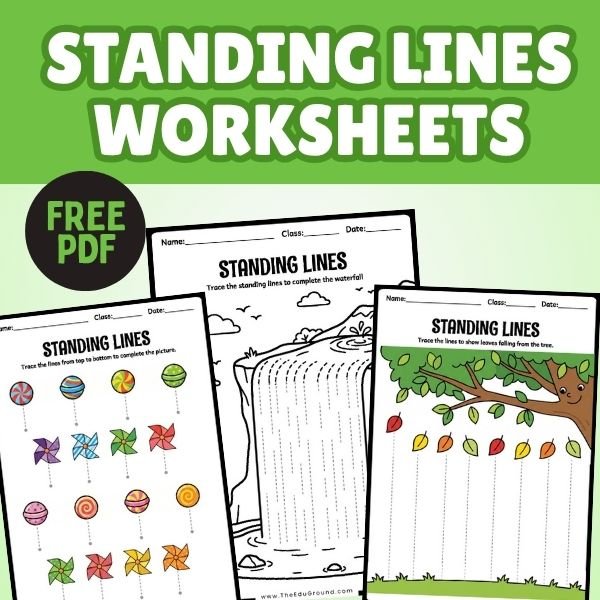
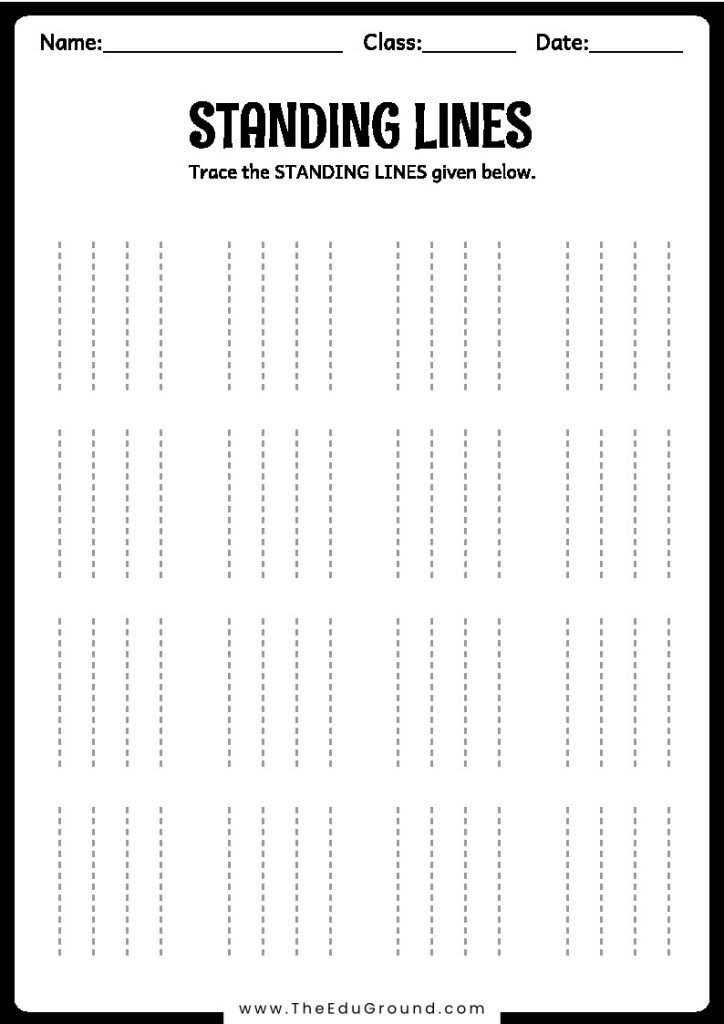
Vertical strokes—traditionally introduced as “standing lines” in preschool and nursery curricula—are the foundational downward movements children need before writing standard print. Along with horizontal sleeping lines, mastering steady downward strokes prepares children for diagonal movements like our slanting line tracing worksheets, essential for forming angular letters like A, M, and N.
These standing line worksheets free printables provide an engaging, structured progression. Learning to pull a crayon or pencil smoothly from top to bottom prepares children to write straight-line letters like L, T, I, and H, as well as numbers like 1 and 4.
Whether you are looking for standing line worksheets for playgroup fine-motor centers or targeted tracing for early learners at home, this standing line worksheets pdf download delivers a zero-prep, confidence-building learning tool.
What’s on Each Worksheet (Skill Progression)
This 8-page set guides young learners through a deliberate pedagogical sequence, moving from guided thematic actions to scenic artwork and independent line control:
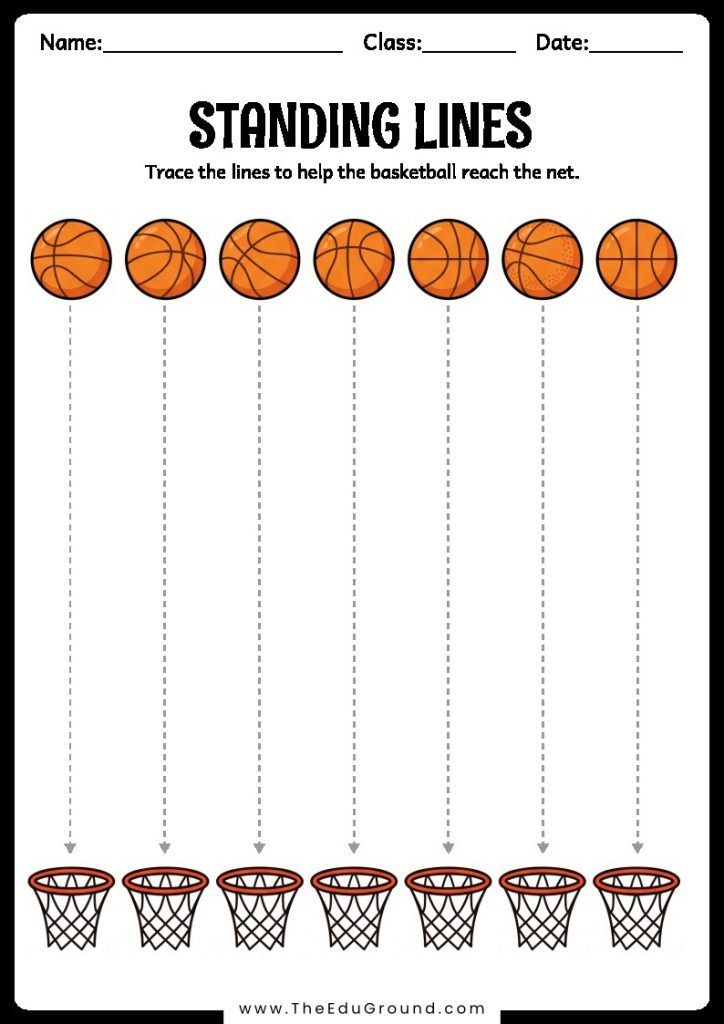
- Worksheet 1 (Sports Target Path): Children trace downward standing lines to drop a basketball straight into the hoop, teaching the basic concept of top-to-bottom pencil travel.
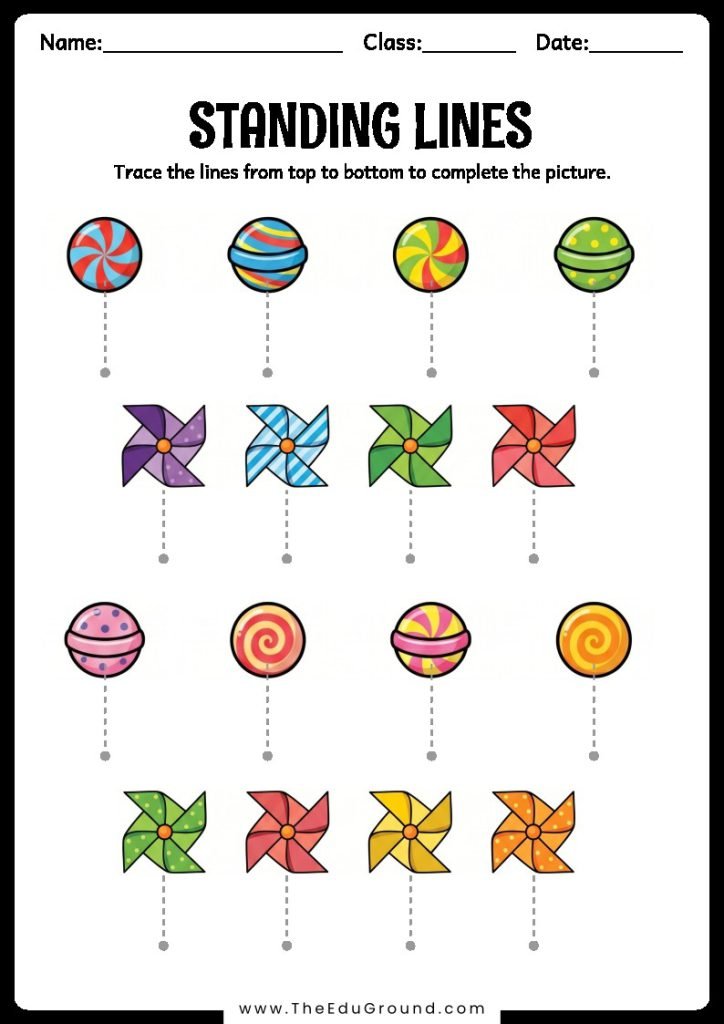
- Worksheet 2 (Object Completion): Learners trace vertical lines downward to complete the sticks of spinning paper pinwheels and swirl lollipops, connecting stroke practice to familiar treats and toys.
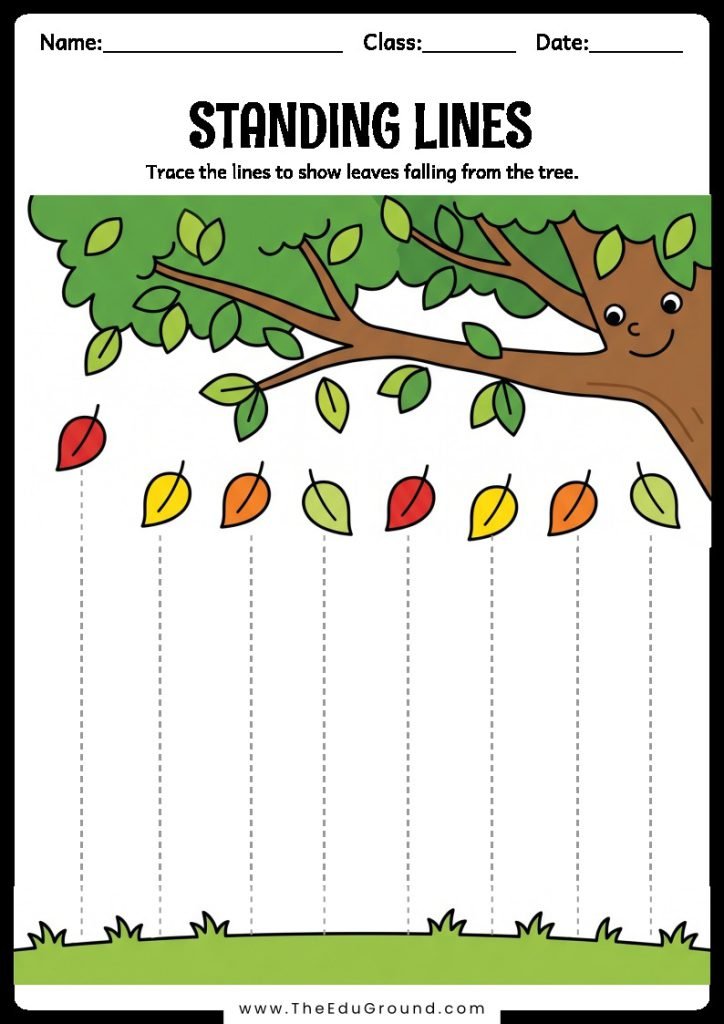
- Worksheet 3 (Nature Motion – Falling Leaves): Children trace vertical paths to show autumn leaves drifting down from tree branches to the ground, reinforcing smooth, continuous arm movement.
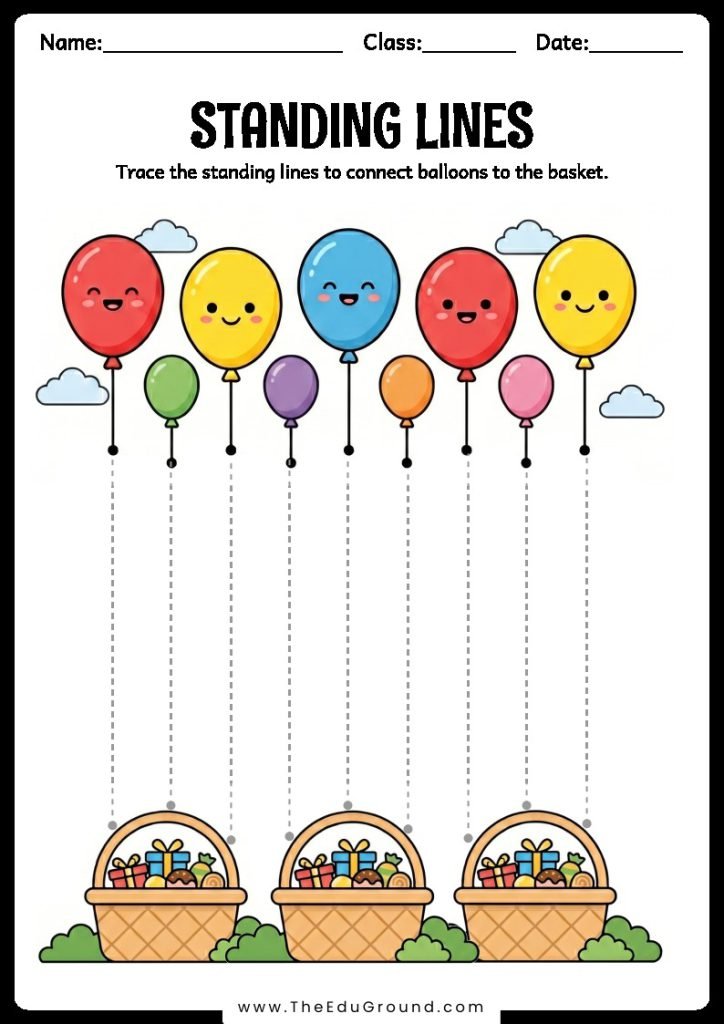
- Worksheet 4 (Connecting Strings – Balloons to Basket): Multiple standing lines invite learners to connect floating balloons down to a basket, practicing repetitive, parallel downward strokes.
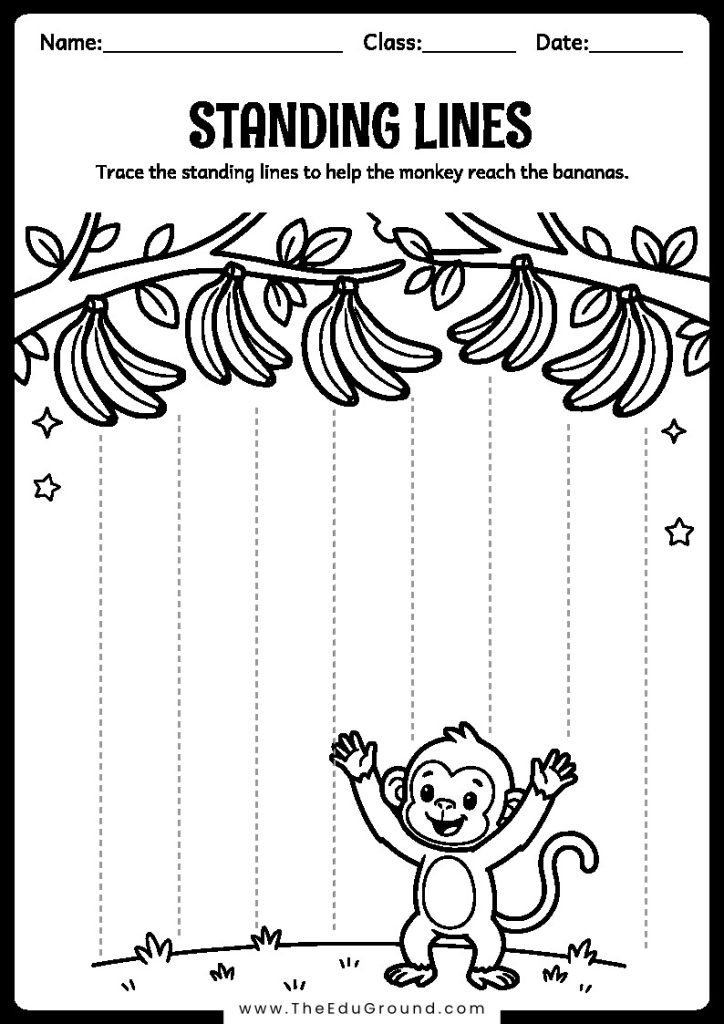
- Worksheet 5 (Reaching Goals – Monkey to Bananas): Learners guide a climbing monkey down to reach a bunch of tasty bananas, encouraging steady hand-eye coordination without lifting the pencil.
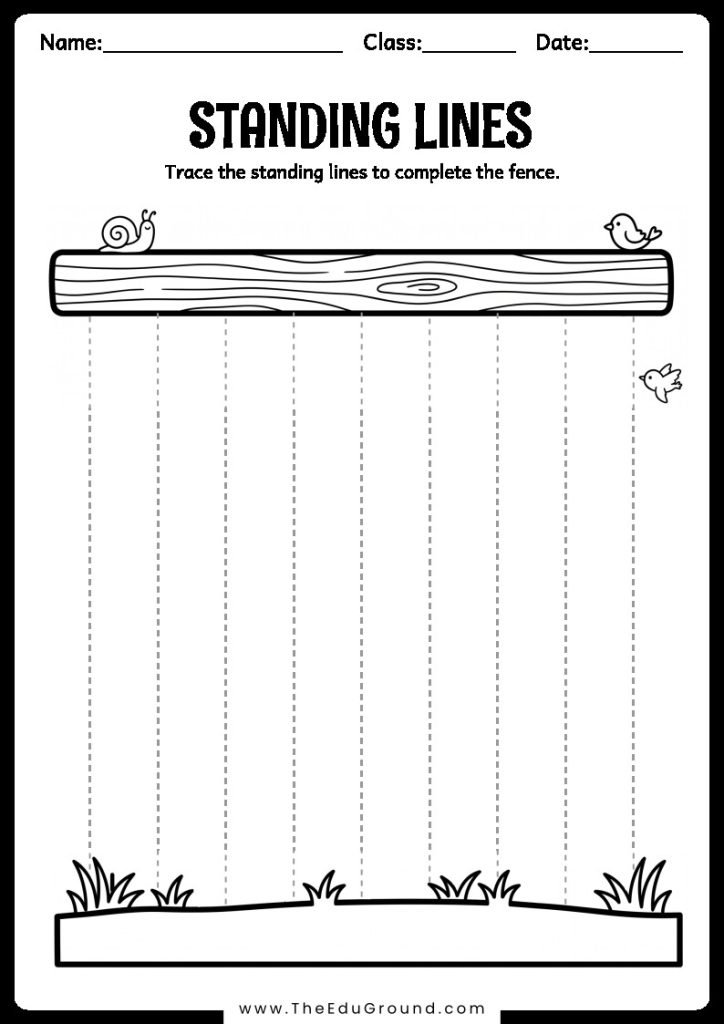
- Worksheet 6 (Pattern Drawing – Completing the Fence): Children draw rhythmic standing lines to finish the pickets on a garden fence, reinforcing consistent line height and spacing.
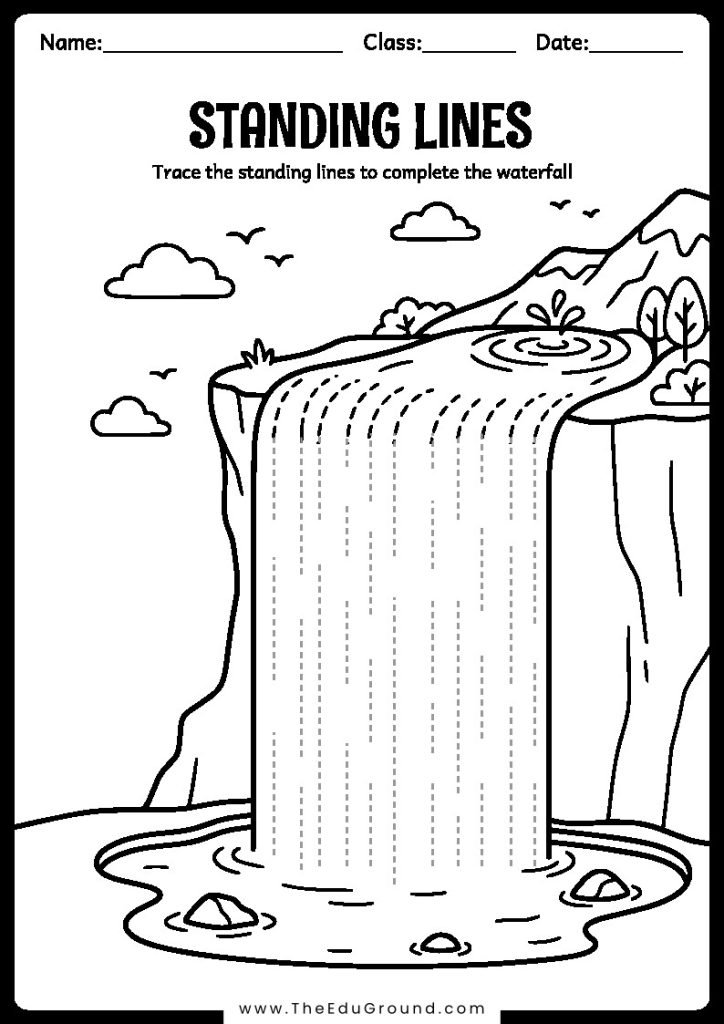
- Worksheet 7 (Scenic Art – Waterfall Flow): Children trace long vertical standing lines to illustrate rushing water falling down a scenic cliff, encouraging confident, full-stroke pencil control.
- Worksheet 8 (Independent Line Mastery): A clean, minimalist practice sheet with standard vertical paths, allowing children to demonstrate independent control and confidence drawing straight standing lines.
Practical Ways to Use These Worksheets
- Air Tracing & Finger Glides: Before using crayons, encourage children to point their index finger high in the air and pull it straight down while saying “down, down, standing line!” to internalize the downward stroke.
- Q-Tip / Finger Paint Tracing: Let toddlers dip a cotton swab or fingertip in washable paint to trace down the dotted lines. This sensory approach builds fine motor precision before pencil pressure is introduced.
- Clay & Playdough Ropes: Have children roll thin snakes or ropes of playdough and place them directly along the standing line paths on the page to build finger muscles and spatial awareness.
- Dry-Erase Activity Binders: Slide the printed pages into reusable sheet protectors. Children can trace with dry-erase markers, wipe clean with a tissue, and repeat the activities daily.
Frequently Asked Questions
Why should kids learn standing lines before letters?
Vertical “standing lines” are one of the most basic, natural movements a child makes with a writing tool. Mastering top-to-bottom pencil control first prevents reversing strokes and gives children the muscle memory needed to form basic uppercase letters like I, L, T, F, and E.
What age group are these worksheets designed for?
This collection is tailored for children ages 2 to 5 years old (playgroup, nursery, pre-k, and kindergarten). The early thematic sheets are accessible for beginners, while the final pages offer practical line control practice for older preschoolers.
How do I download the standing line worksheets for nursery PDF?
Click the download button near the top of the page to open and save the high-resolution, print-ready PDF file instantly. It is 100% free to print for home, preschool, or classroom use.