
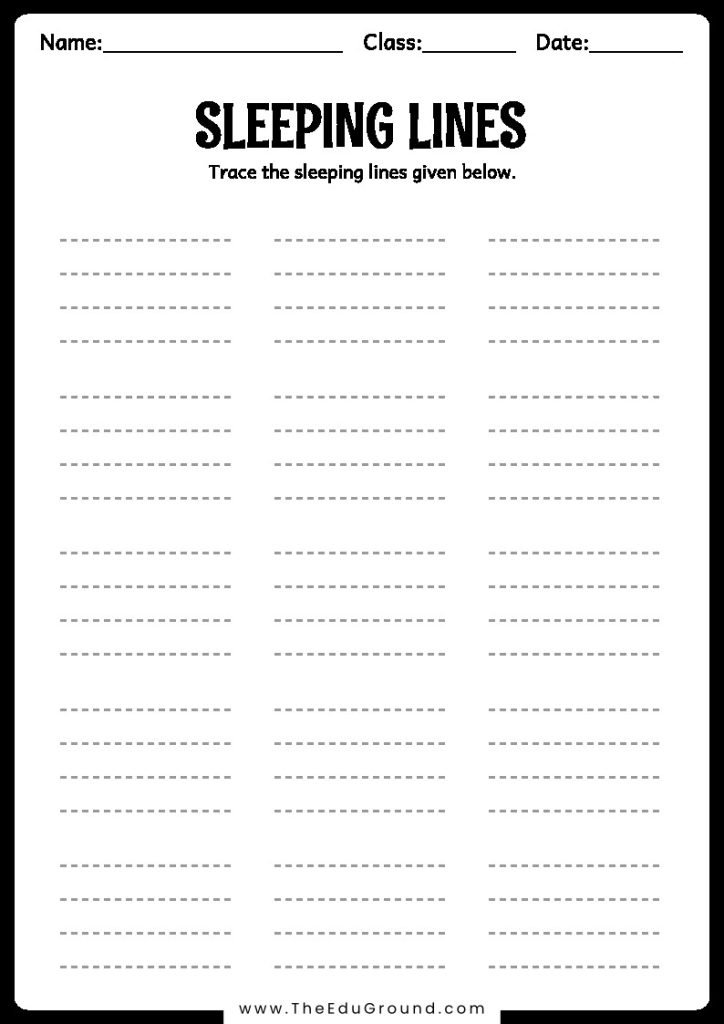
Before toddlers and preschoolers learn to write alphabets and numbers, they must first master pre-writing strokes. Horizontal lines—commonly called “sleeping lines” in early childhood curricula—are among the very first strokes children learn to control.
These sleeping line worksheets free printables provide a gentle, step-by-step progression that builds confidence. Moving your pencil smoothly from left to right lays the groundwork not only for writing letters like E, F, H, and T, but also for tracking words across a page when learning to read. Along with horizontal sleeping lines, mastering vertical standing line worksheets builds the foundational downward pencil control needed before writing standard print.
Whether you need sleeping line worksheets for playgroup circle time or structured line practice for home, this sleeping line worksheets pdf download gives educators and parents a zero-prep tool that turns basic stroke drills into purposeful play.
What’s on Each Worksheet (Skill Progression)
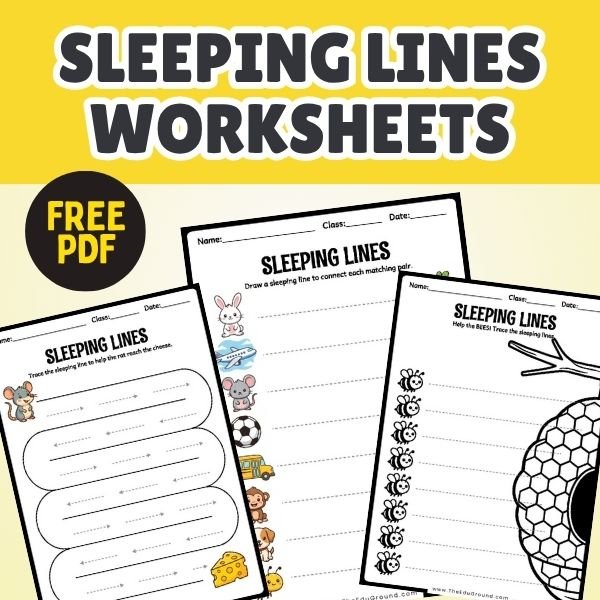
This pack of 8 worksheets follows a deliberate pedagogical flow, advancing from guided visual pairing to thematic story paths and independent pencil control:
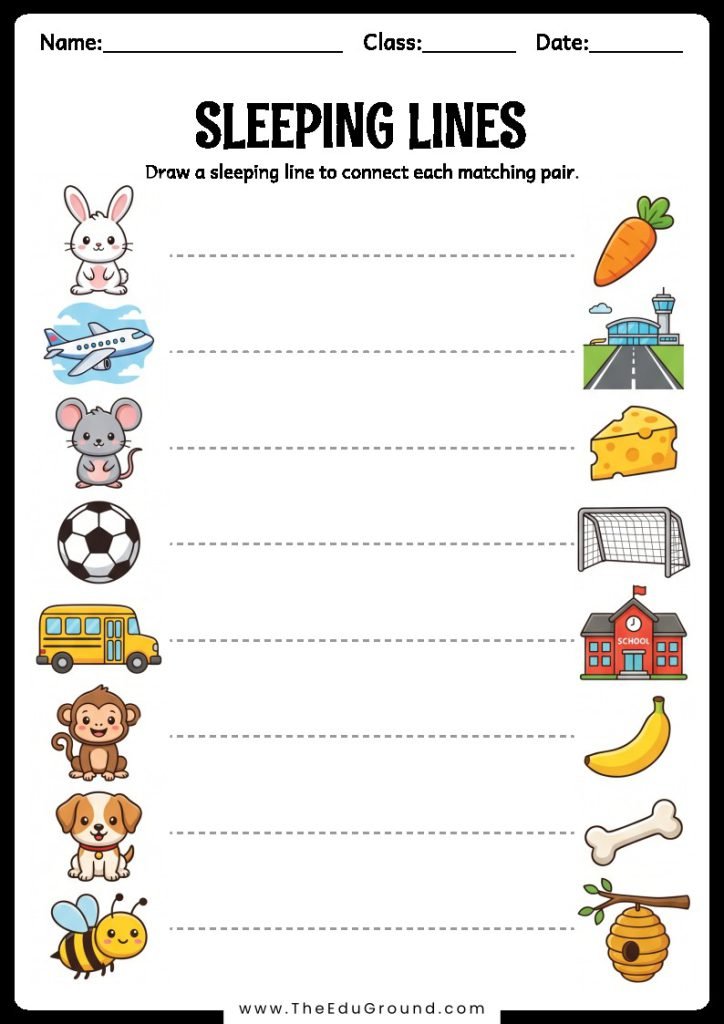
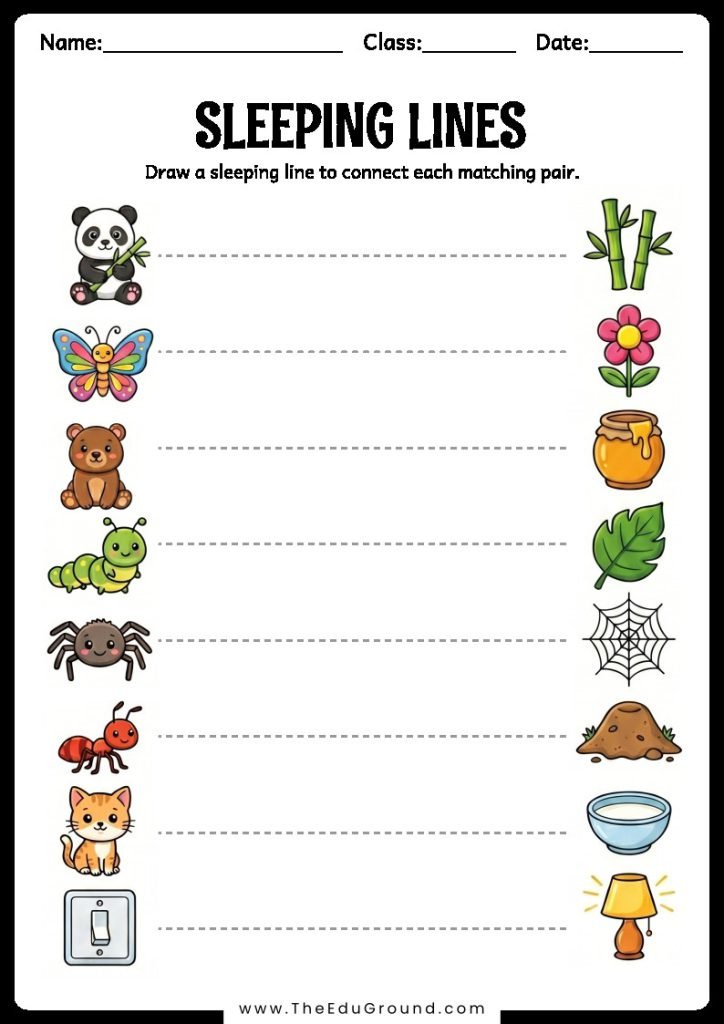
- Worksheets 1 & 2 (Visual Matching & Stroke Control): Children draw a sleeping line straight across the page to connect identical matching pairs. This strengthens visual discrimination while reinforcing straight-line tracking.
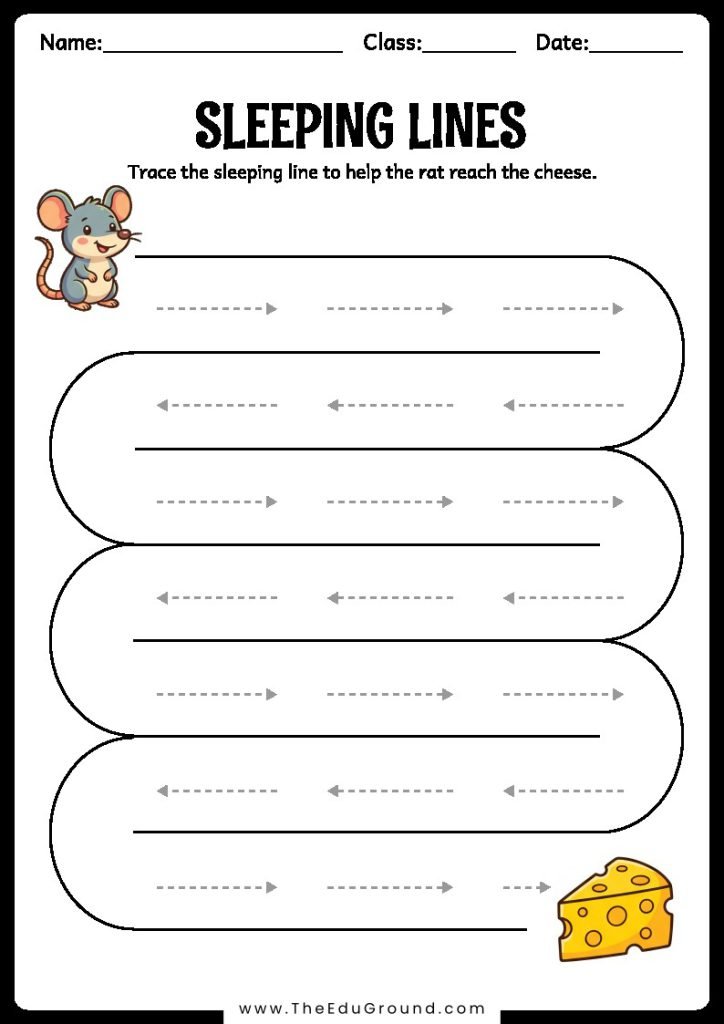
- Worksheet 3 (Directional Path – Mouse to Cheese): Learners trace a sleeping line from left to right to help a hungry mouse reach the cheese, establishing clear left-to-right directionality.
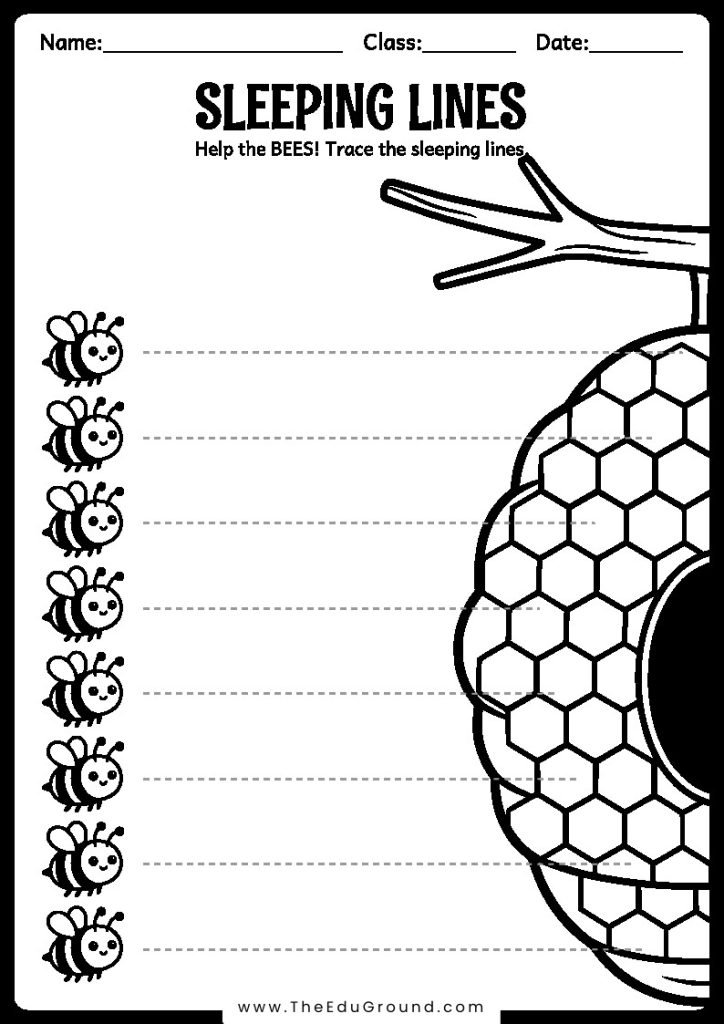
- Worksheet 4 (Repetitive Tracking – Bees to Hive): Multiple horizontal lines encourage children to guide flying bees across the page to their beehive, practicing steady hand movement without lifting the pencil.
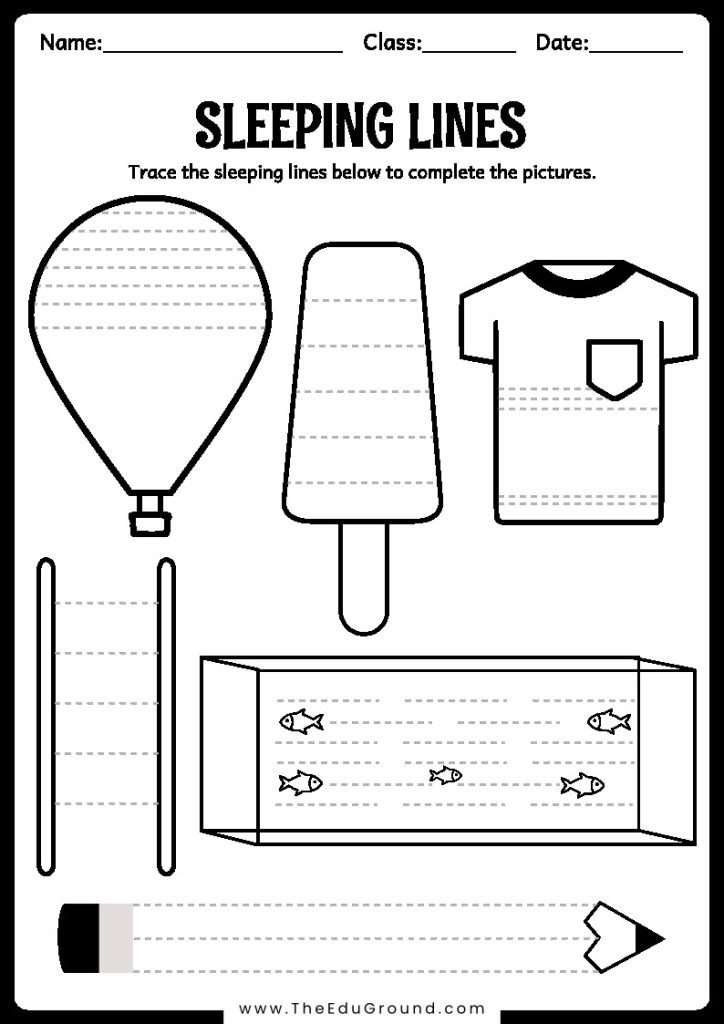
- Worksheet 5 (Picture Completion): Children trace sleeping lines integrated directly into illustrations to finish an incomplete picture, connecting stroke practice to visual art.
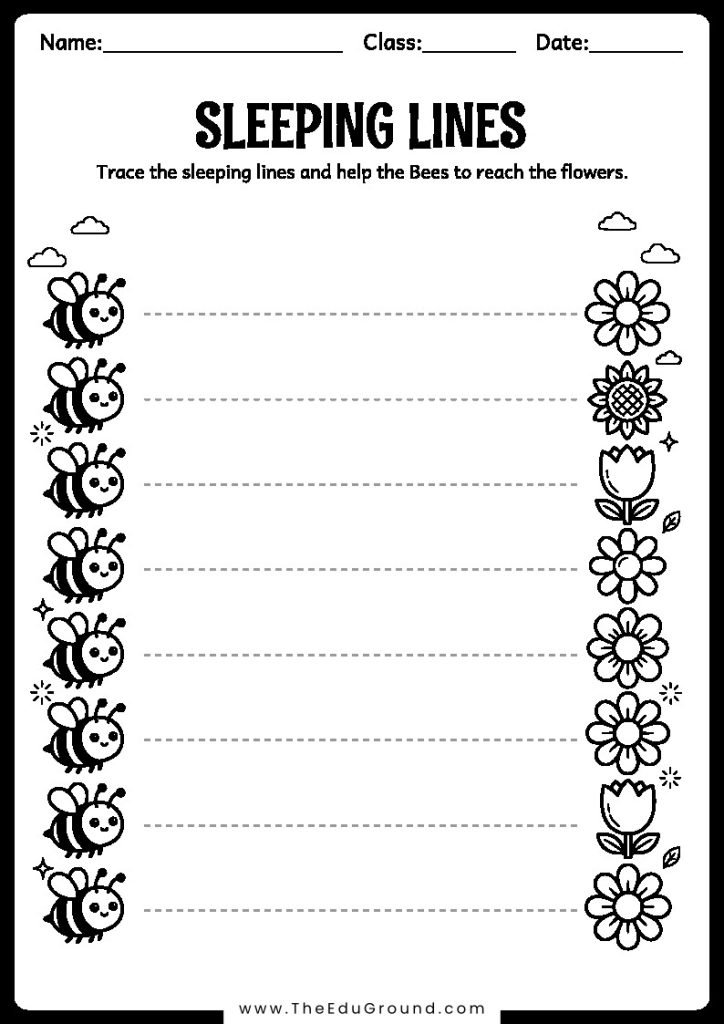
- Worksheet 6 (Fine-Motor Coordination – Bees to Flowers): Reinforces left-to-right control with narrower guiding paths as bees journey across to find blooming flowers.
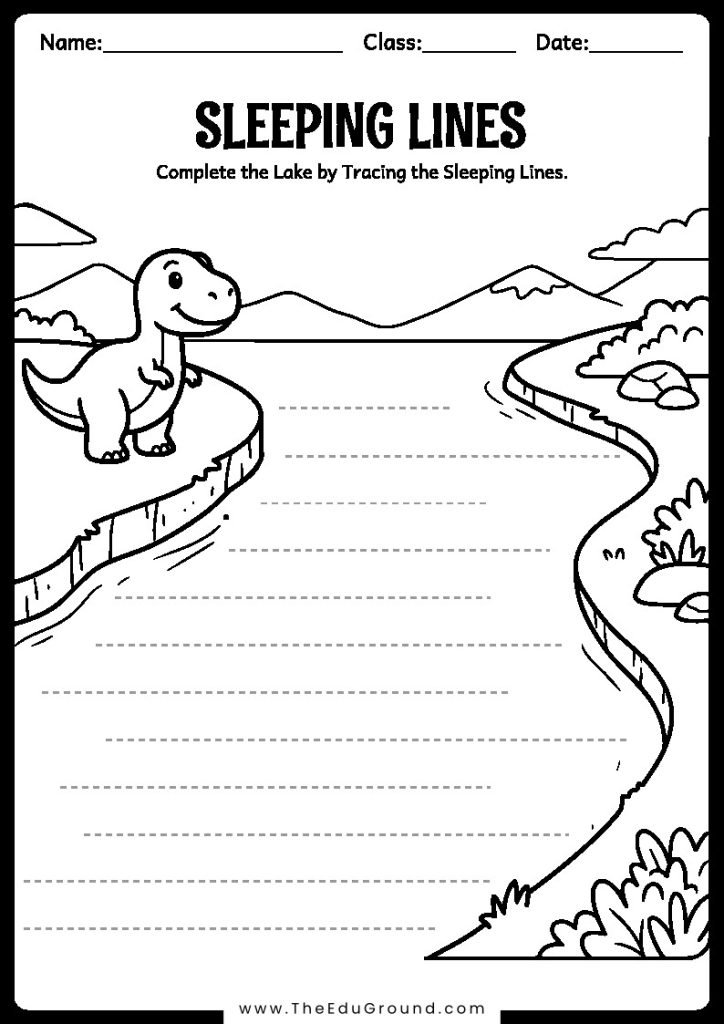
- Worksheet 7 (Scene Drawing – Creating Lake Waves): Children trace rhythmic sleeping lines to illustrate the water waves on a scenic lake, encouraging smooth, continuous arm movement.
- Worksheet 8 (Independent Line Tracing): A clean, distraction-free practice sheet with standard horizontal paths, allowing children to demonstrate mastery of straight, steady lines independently.
Practical Ways to Use These Worksheets
- Finger Tracing Before Pencil Work: Before handing your child a crayon, have them “drive” their index finger along the dotted line from left to right while making a buzzing or zooming sound.
- Sensory Tray Warm-Up: Pair these pages with a shallow tray of sand, salt, or shaving cream. Encourage children to draw “sleeping lines” in the sand with their fingers before doing the pencil tracing on paper.
- Sticker / Dot Marker Paths: For younger toddlers in playgroup who are not yet holding a pencil with a tripod grip, let them place round stickers or dot markers along the sleeping line paths to build pincer grasp strength.
- Reusable Laminated Practice: Slip the pages into clear dry-erase plastic sleeves. Children can trace the lines with dry-erase markers, wipe them clean with a cloth, and practice repeatedly without reprinting.
Frequently Asked Questions
Why are sleeping lines taught before letters and numbers?
Horizontal strokes (“sleeping lines”) and vertical strokes (“standing lines”) are the fundamental building blocks of handwriting. Mastering these strokes first prevents frustration when children start forming letters like L, T, H, and E, or numbers like 4 and 7.
What age group are these worksheets best suited for?
This pack is designed for children ages 2 to 5 years old. It serves as an ideal introductory resource for playgroup toddlers, nursery students, and preschoolers beginning pencil-control activities.
How do I get the sleeping line worksheets for nursery PDF?
Simply click the download button above to instantly open and save the high-resolution, print-ready PDF file. It is 100% free for parents, homeschoolers, and teachers.