
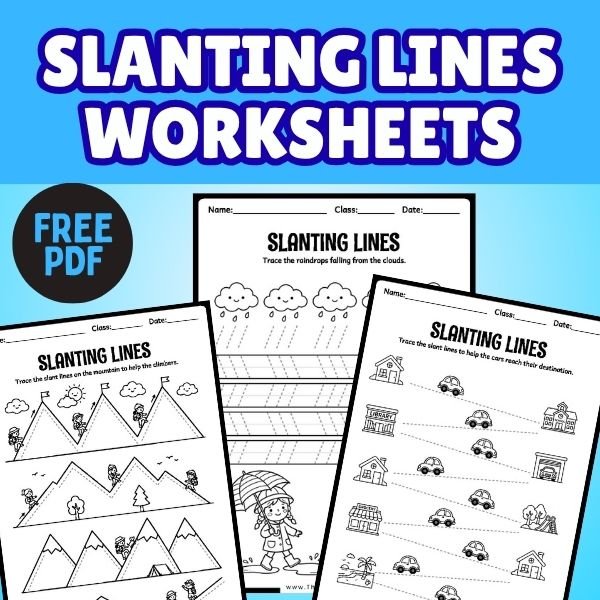
After toddlers and preschoolers learn to control horizontal sleeping lines and vertical standing lines, diagonal strokes are the next major milestone in early handwriting. Drawing at an angle requires a higher level of fine-motor coordination and spatial awareness because children must guide their hand across two planes at once. Once diagonal strokes are mastered, children are ready for more complex wrist rotation found in our curved line tracing worksheets.
These slanting line worksheets free printables provide a supportive, step-by-step path to master this new movement. Developing steady diagonal line control is essential for forming angular letters like A, M, N, V, W, X, and Z, as well as numbers like 4 and 7.
Whether you are organizing fine-motor trays for slanting line worksheets for playgroup or guiding nursery students through early pencil grip at home, this slanting line worksheets pdf download delivers a zero-prep, engaging practice resource.
What’s on Each Worksheet (Skill Progression)
This 8-page set takes children on a creative learning journey, moving from fun decorative patterns to dynamic outdoor action scenes and independent diagonal stroke tracing:
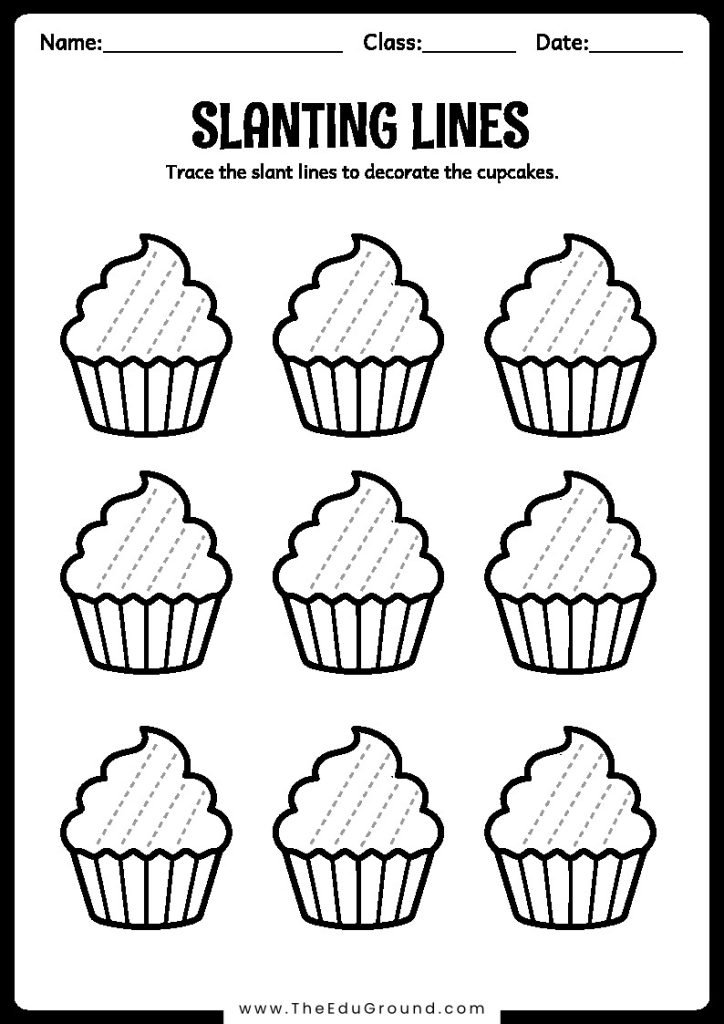
- Worksheet 1 (Pattern Decoration – Cupcakes): Children trace short diagonal slanting lines to decorate sweet cupcakes with colorful sprinkles and icing patterns, making first strokes playful and low-pressure.
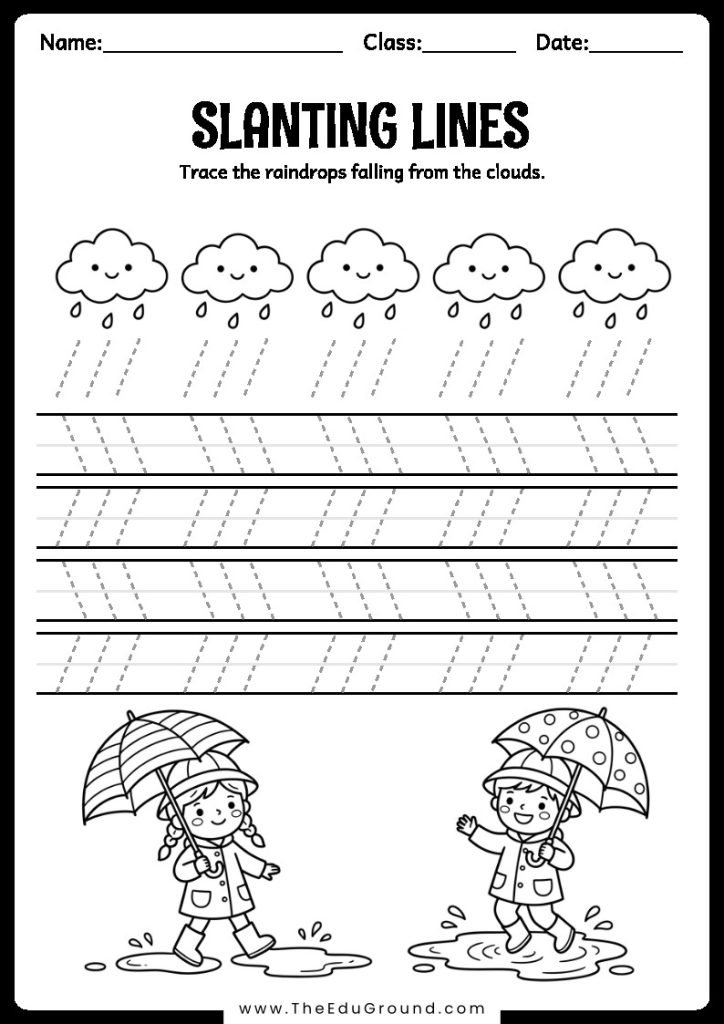
- Worksheet 2 (Nature Motion – Rain from Clouds): Learners trace gentle slanting lines downward from fluffy clouds to create a refreshing rain shower, reinforcing steady, continuous diagonal strokes.
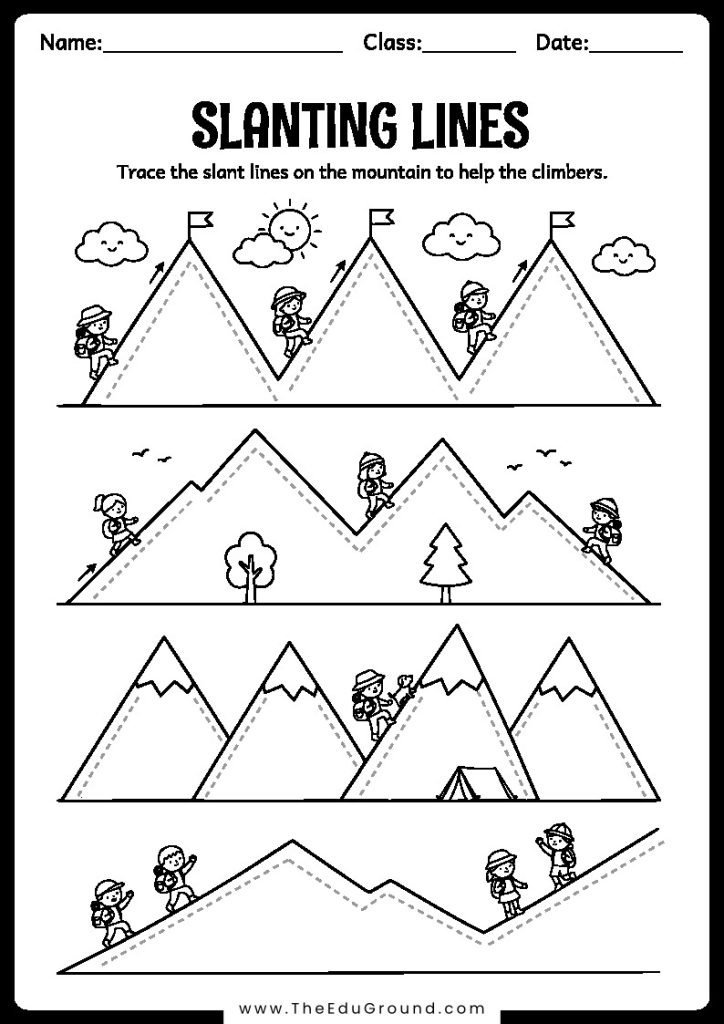
- Worksheet 3 (Adventure Slopes – Mountain Climbers): Children trace steep slanting lines along mountainsides to help energetic climbers hike toward the summit, practicing extended arm movement.
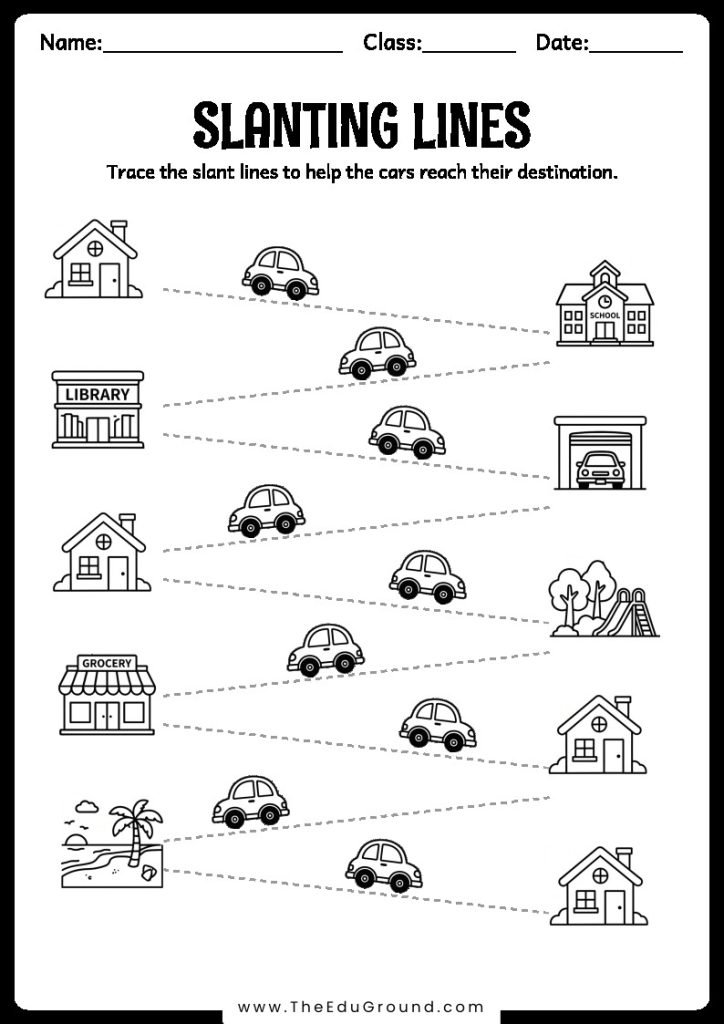
- Worksheet 4 (Steering Paths – Cars to Destination): Learners guide cars along angled roads and ramps toward their finish line, reinforcing hand-eye coordination and spatial accuracy.
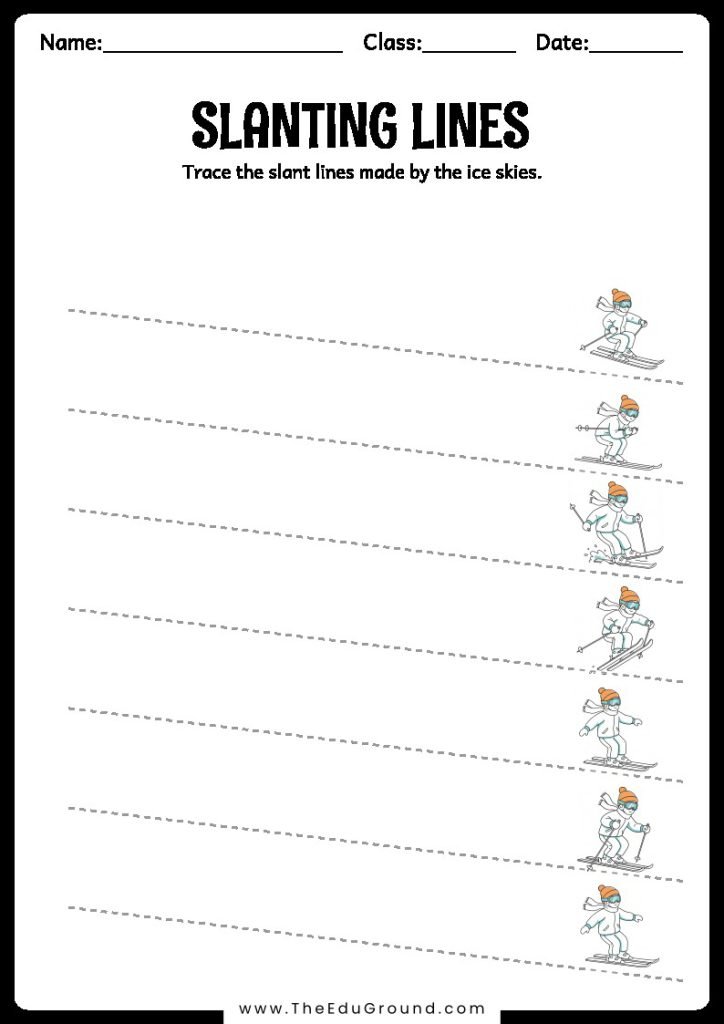
- Worksheet 5 (Winter Sports – Ski Tracks in the Snow): Children trace the crisp slanting tracks left behind by gliding skis on a snowy hillside, strengthening consistent diagonal directionality.
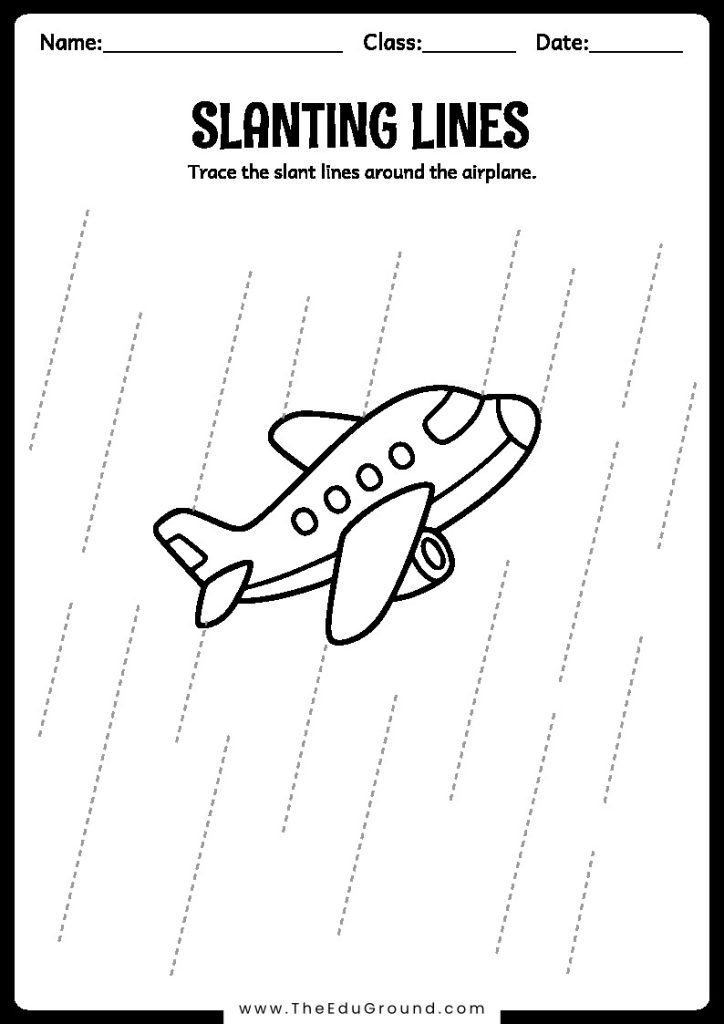
- Worksheet 6 (Flight Trails – Airplane in the Sky): Learners trace swooping diagonal flight lines around a soaring airplane, developing smooth wrist movement and pencil glide across the paper.
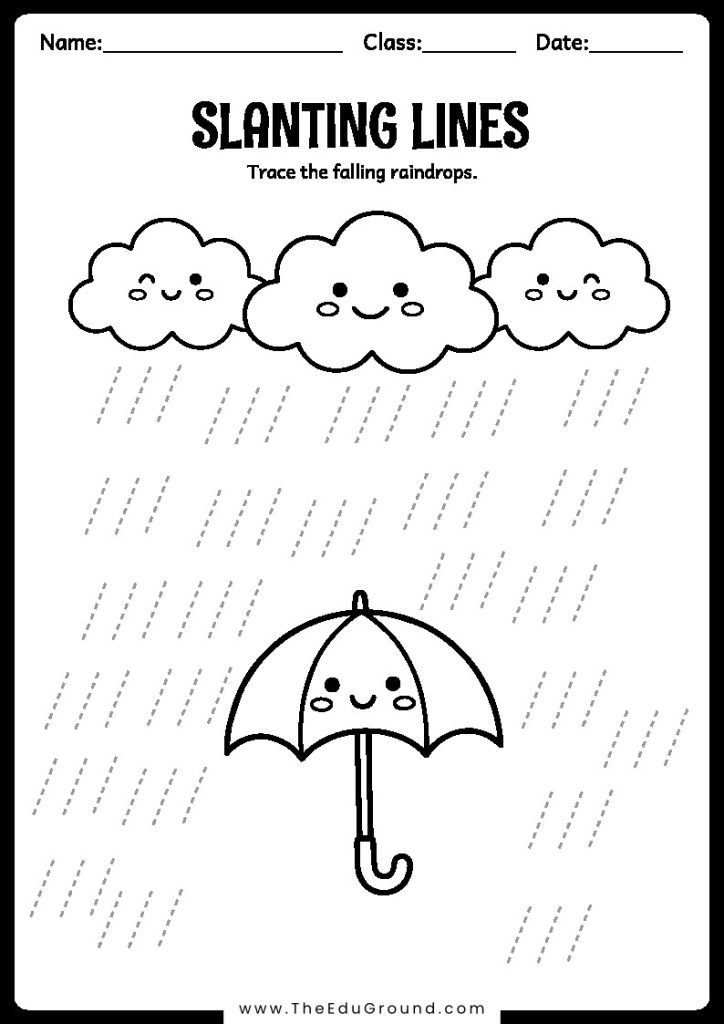
- Worksheet 7 (Rhythmic Weather Tracing – Falling Raindrops): A full-page shower of repetitive falling raindrops encourages rhythmic, repeated slanting strokes to build muscle memory and stroke consistency.
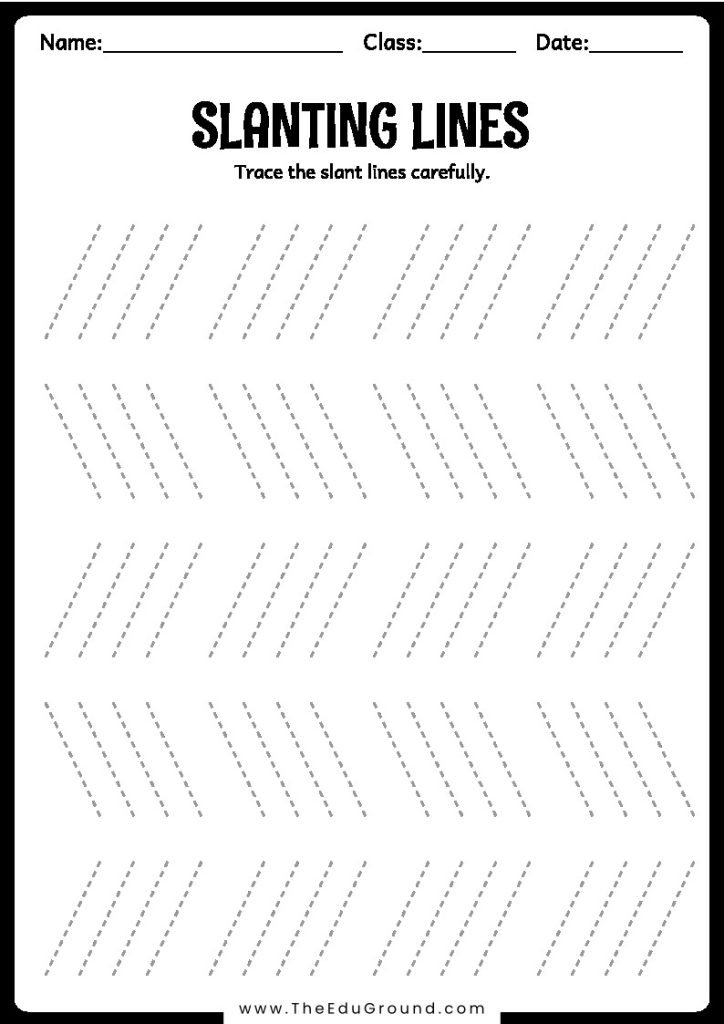
- Worksheet 8 (Independent Slanting Line Tracing): A clean, minimalist practice sheet with standard diagonal dotted paths, allowing young learners to demonstrate confident, independent line formation.
Practical Ways to Use These Worksheets
- Rainbow Tracing: Have children trace each slanting line multiple times using different colored crayons to create vibrant rainbow rain or colorful ski paths while reinforcing grip.
- Sensory Tray Angled Strokes: Before pencil work, set up a shallow tray of salt, sand, or rice. Show children how to swipe their fingers down at an angle to practice making slanting lines with physical feedback.
- Sticker / Cotton Swab Dab: For younger toddlers in playgroup, have them use cotton swabs dipped in washable paint or small round stickers to dot along the slanted lines to build pincher strength before holding a pencil.
- Reusable Dry-Erase Binders: Place the printed sheets into heavy-duty plastic page protectors. Learners can use dry-erase markers to trace the slanting lines, wipe them off with a cloth, and practice again and again.
Frequently Asked Questions
Why are slanting lines considered harder for toddlers than straight lines?
Horizontal and vertical lines follow straight visual axes (left-right or up-down). Slanting lines require children to move their hand diagonally across two axes simultaneously, which calls for greater finger control, hand stability, and spatial judgment.
What age group are these worksheets best suited for?
This 8-page collection is designed for children ages 2 to 5 years old (playgroup, nursery, pre-k, and early kindergarten). The thematic illustrations keep beginners engaged, while the later pages provide focused pre-writing practice for school readiness.
How do I get the slanting line worksheets for nursery PDF?
Simply click the download button located near the top of the page to open and save the high-resolution, print-ready PDF file instantly. It is 100% free to download and print for home, preschool, or classroom use.