
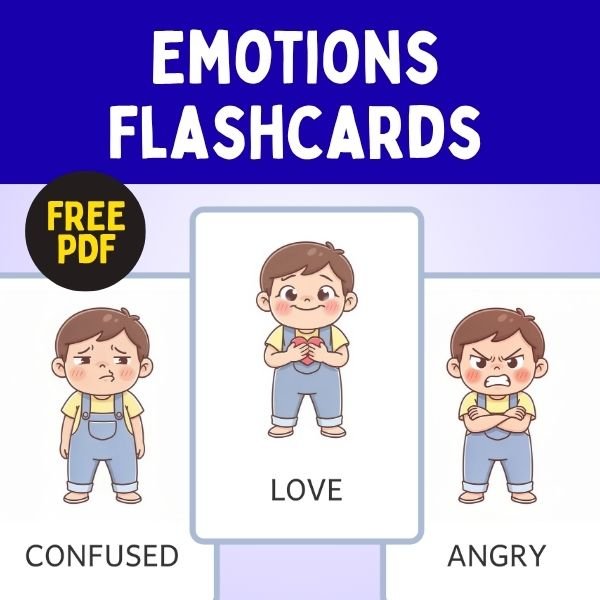
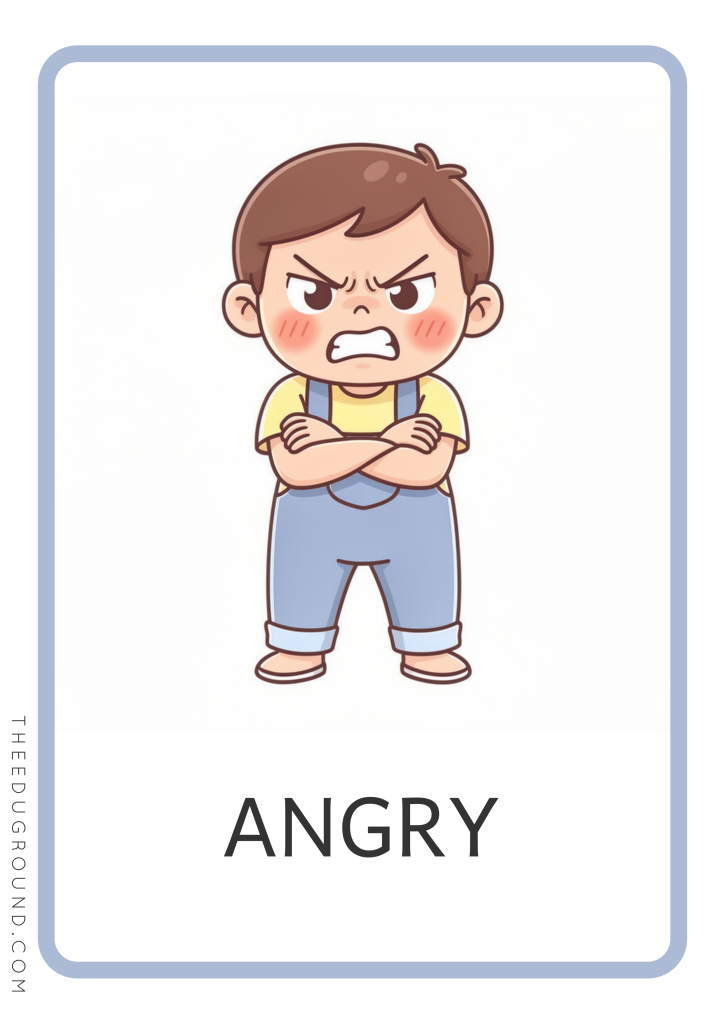
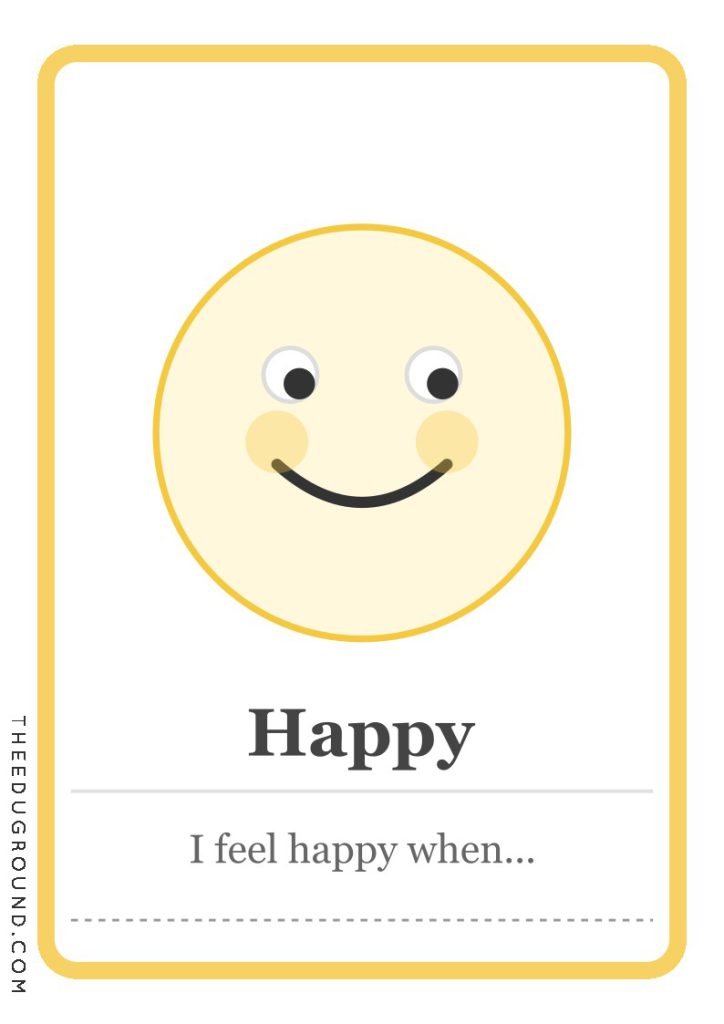
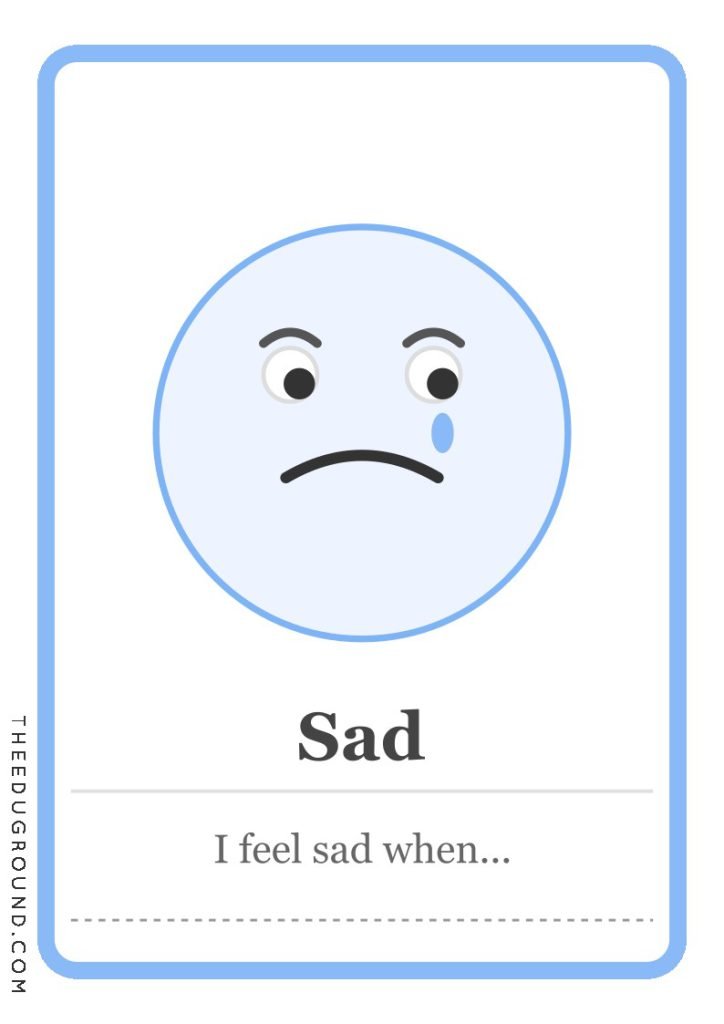
Recognizing internal sensations is one of the most vital developmental milestones in early childhood. These emotions flashcards for kids provide a gentle, structured way for children to build self-awareness, develop empathy, and put complex feelings into words.
Unlike standard sets that only show basic emotions, this printable feelings and emotions flashcards pdf includes both emotional states and everyday physical needs. Because a hungry or thirsty child often displays frustration or sadness without knowing why, learning to label physical cues alongside emotional ones gives children a complete vocabulary to understand their own bodies and behavior.
What’s Inside the PDF
You get 46 total printable cards across two targeted learning variations (23 feelings per set):
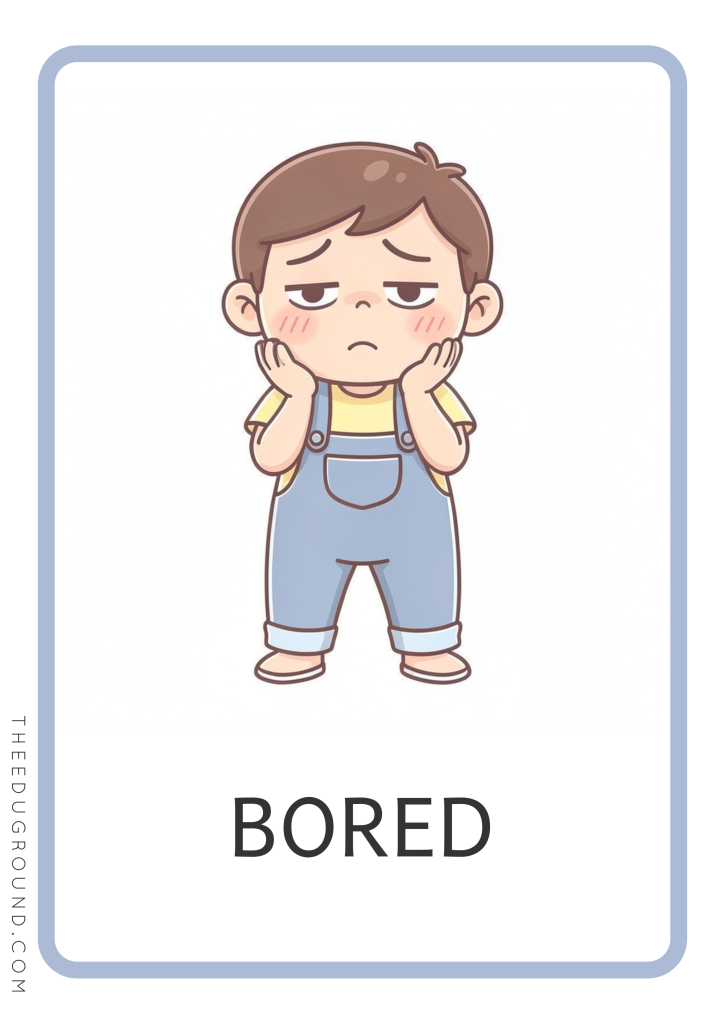
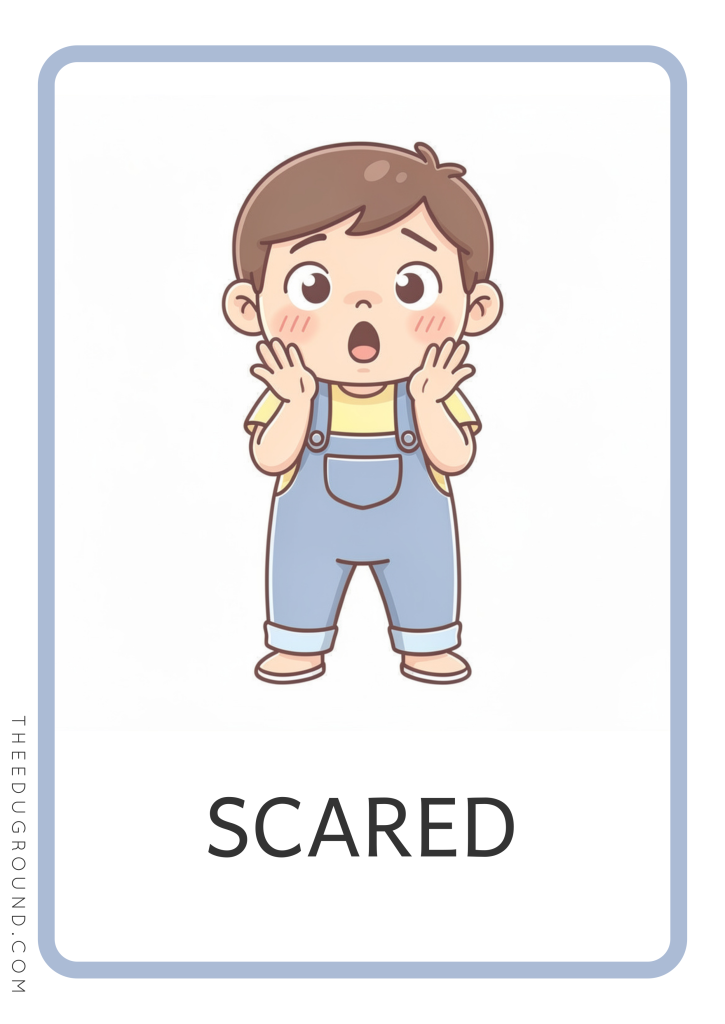
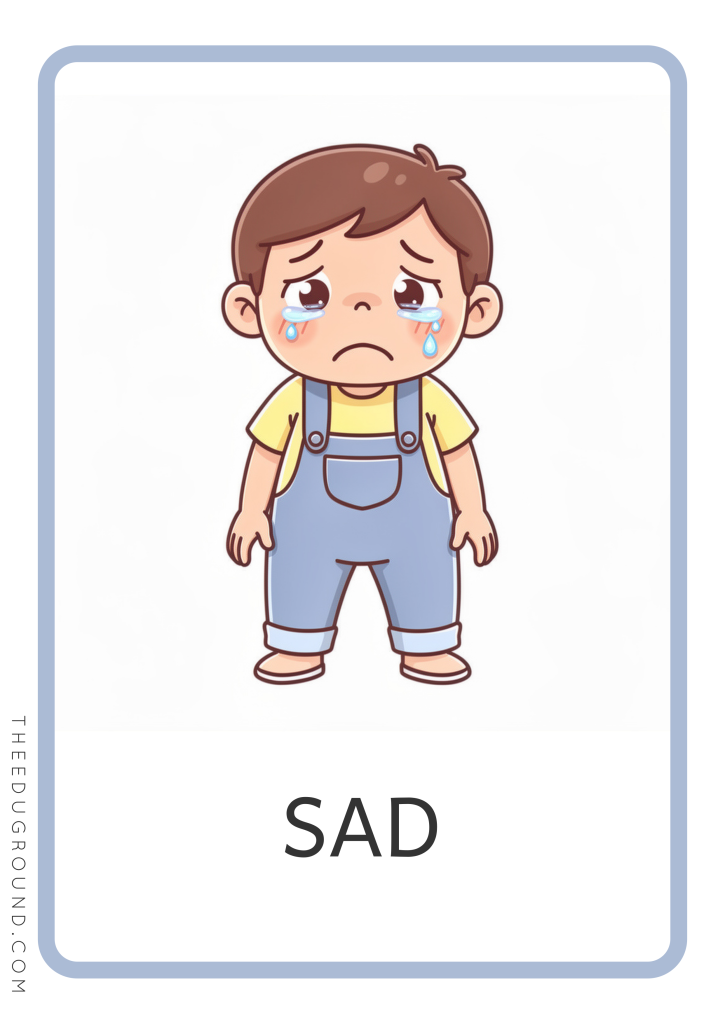
- Version 1 – Visual Recognition (Image + Emotion Name): Features expressive watercolor child illustrations with clear, bold emotion titles. Uncluttered and accessible—ideal for ages 2–5, calm-down corners, and daily morning circle displays.
- Version 2 – Communication & Journaling (Image + Name + Prompt Line): Includes the full visual illustration plus an intuitive sentence starter: “I feel ___ when…” with a primary dotted writing line. Perfect for ages 3–8, early writing practice, therapy discussions, and SEL reflection.
All 23 Feelings Covered
- Emotional States (20 Cards): Happy, Sad, Angry, Scared, Surprised, Excited, Bored, Tired, Worried, Proud, Confused, Shy, Disgusted, Calm, Frustrated, Lonely, Grateful, Nervous, Jealous, Loved.
- Physical & Body States (3 Cards): Hungry, Thirsty, Curious.
Practical Ways to Use These Flashcards
- Morning “How Do I Feel Today?” Check-In: Place the cards on a pocket chart or tabletop during morning arrival. Have each child pick the card that best matches their current state (whether they feel Excited, Tired, or Hungry) to set an empathetic tone for the day.
- Calm-Down Corner Self-Regulation: Keep a set of emotions flashcards printable in your quiet corner. When a child feels overwhelmed, let them flip through the cards to show you what they are experiencing without the pressure of speaking right away.
- “I Feel ___ When…” Reflection Prompts: Use Version 2 for small-group SEL lessons. Hold up a card (such as Frustrated or Proud) and ask children to complete the sentence with a real-life example from their day or week.
- Emotion & Expression Mirror Play: Hold up a card and invite children to use a small hand mirror to practice making the facial expression and body posture shown on the illustration.
Frequently Asked Questions
This collection is designed for children ages 2 to 8 (toddlers, preschoolers, kindergarteners, and early elementary students). Version 1 works best for early identification with toddlers and preschoolers (ages 2–5), while Version 2 provides structured writing and discussion prompts for ages 3–8.
Young children often confuse physical discomfort with emotional distress. By teaching physical cues alongside emotional terms, children learn to identify whether their frustration or tiredness simply comes from needing a glass of water or a snack.
Yes. Both Version 1 and Version 2 are 100% free to download as an instant emotions flashcards pdf for personal, classroom, homeschool, or counseling use—no registration or email required.