
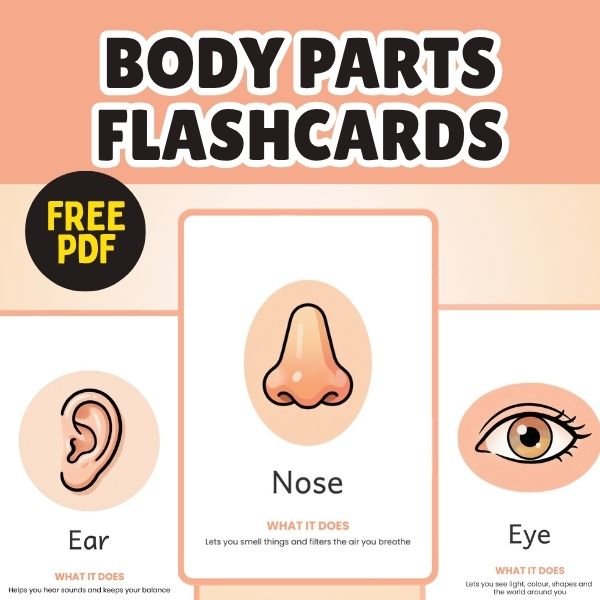
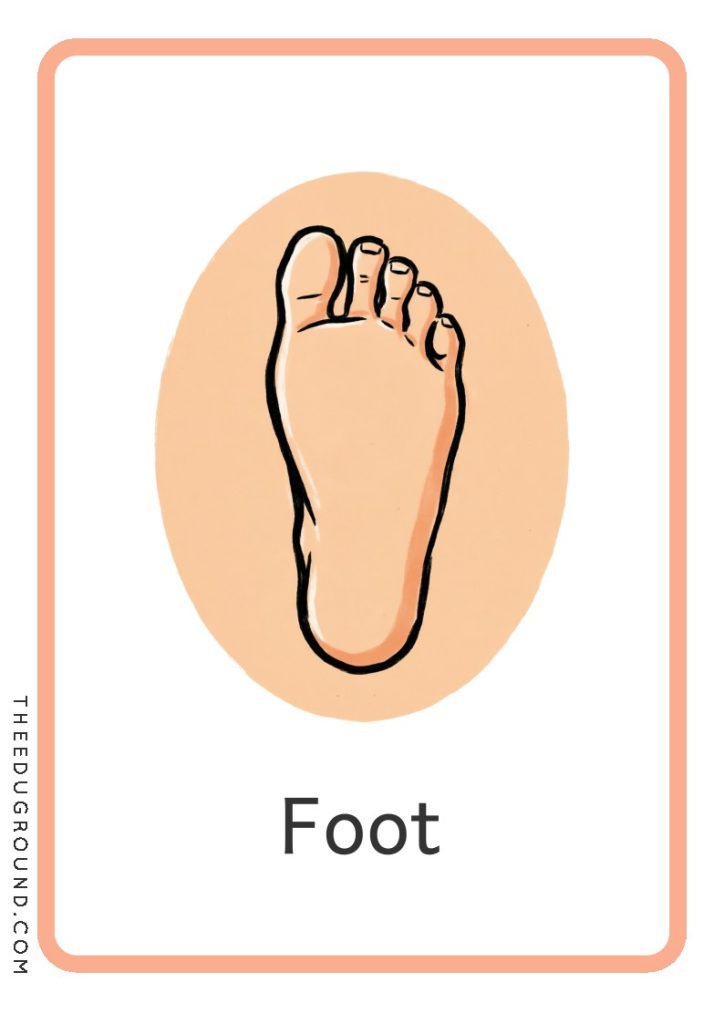
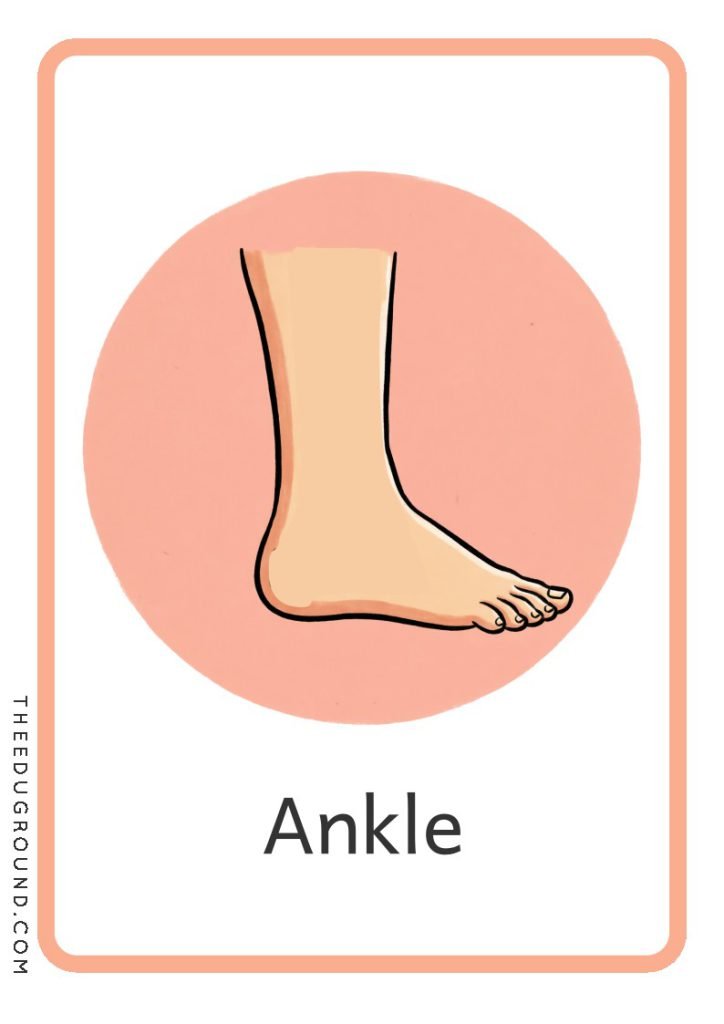
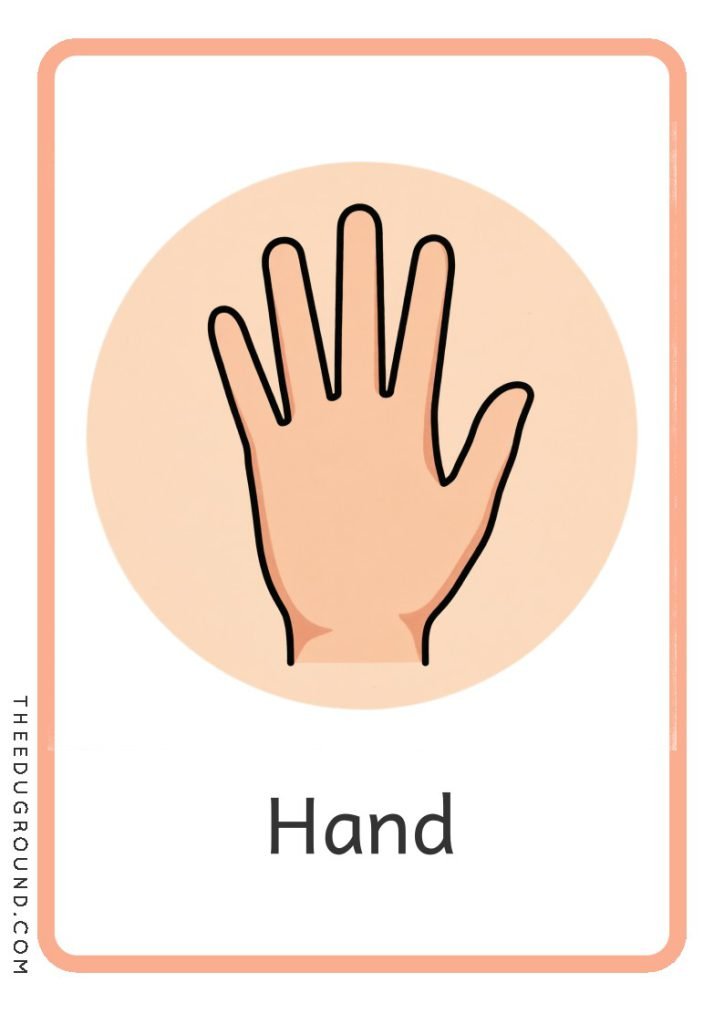
Understanding the human body begins with simple identification and grows into learning how each part helps us move, sense, and explore. These preschool body parts flashcards offer an intuitive, 2-stage visual system that takes children from naming familiar features to understanding bodily functions.
Whether you are introducing basic facial terms during circle time or expanding elementary vocabulary with less common terms like calf, wrist, and spine, this free printable body parts flashcards with pictures pdf provides a practical, zero-prep resource for home and classroom learning.
What’s Inside the PDF
You get 60 total printable cards across two progressive learning versions (30 body parts per set):
- Version 1 – Visual Identification (Image + Name): Features clean vector illustrations with clear highlights on the specific body part paired with bold text. Distraction-free and accessible—ideal for ages 2–4 and simple pointing games.
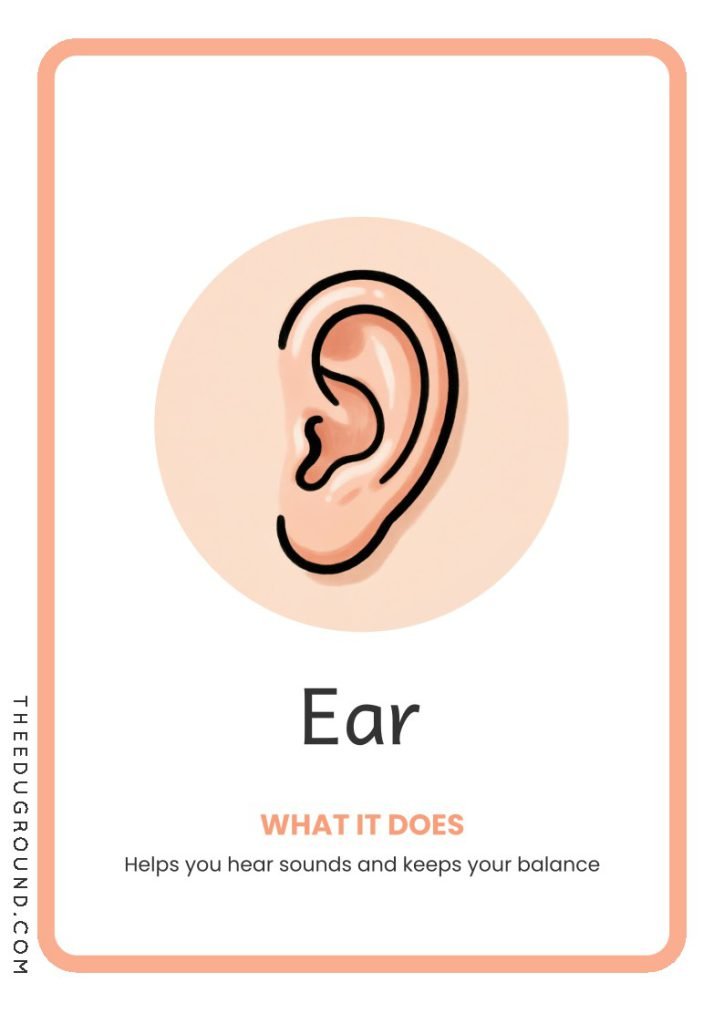
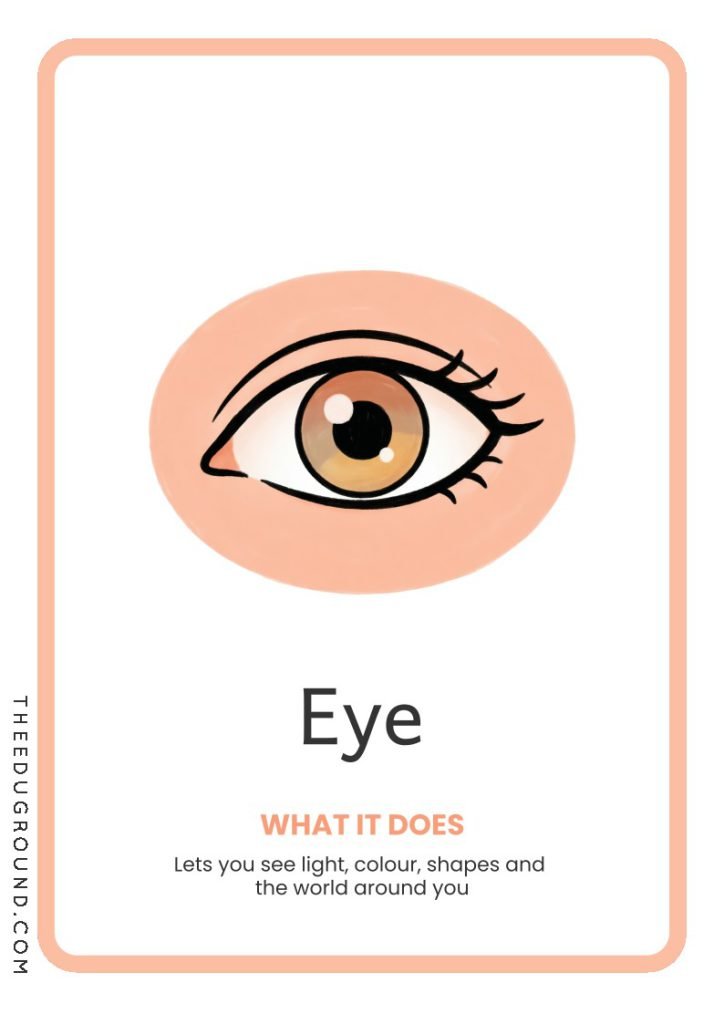
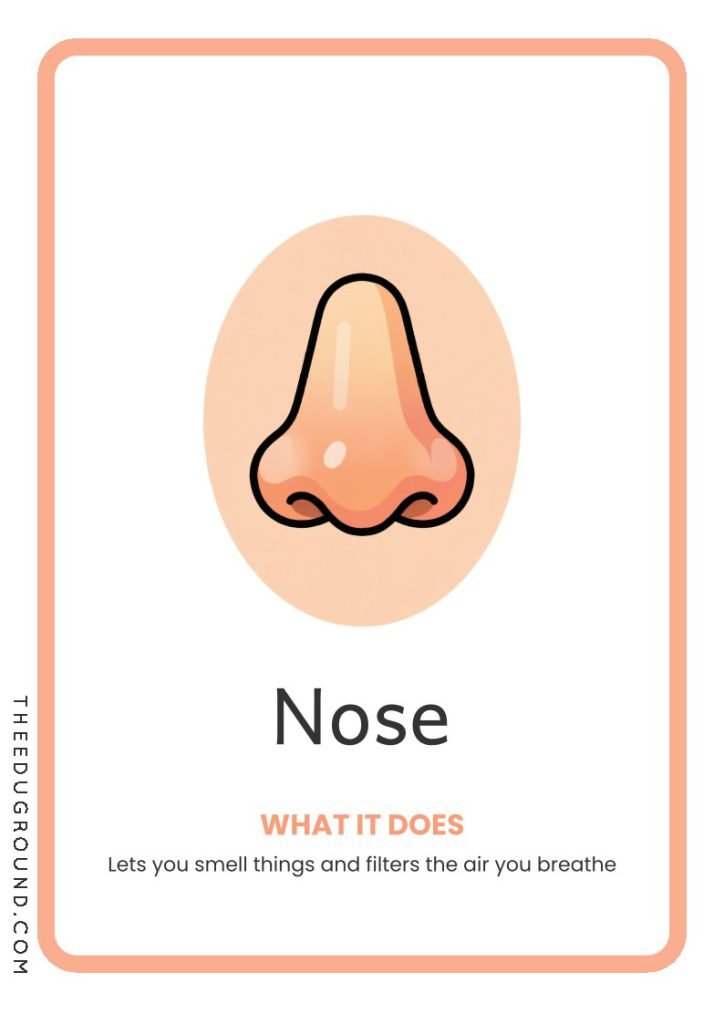
- Version 2 – Functional Anatomy (Image + Name + Function): Includes the highlighted illustration alongside a concise explanation of what that body part does (e.g., Eyes: used for seeing and observing or Knees: help our legs bend and jump). Ideal for ages 4–8, early science topics, and classroom discussions.
30 Body Parts Across 3 Anatomical Groups
- Group 1 – Head & Face (10 Cards): Head, Hair, Eye, Ear, Nose, Mouth, Teeth, Tongue, Cheek, Chin.The most familiar features—ideal starting point for toddlers and preschoolers.
- Group 2 – Upper Body (10 Cards): Neck, Shoulder, Chest, Back, Arm, Elbow, Wrist, Hand, Finger, Thumb.The connecting and working parts of the body that build vocabulary beyond the basics.
- Group 3 – Lower Body (10 Cards): Stomach, Hip, Leg, Knee, Ankle, Foot, Toe, Heel, Calf, Spine.The supporting parts that carry and balance the body, introducing foundational anatomy words.
Practical Ways to Use These Flashcards
- “Touch & Name” Simon Says: Hold up a card from body parts flashcards for preschool (like Elbow or Ankle) and have children quickly touch that part on their own body while saying the name aloud.
- Function Clue Match: Read the function line from a Version 2 card (e.g., “I bend to help you kick a ball—what am I?”) and let learners guess the body part before revealing the illustration.
- Top-to-Bottom Body Assembly: Lay the cards out on a table or carpet and challenge children to arrange them in anatomical order from the top of the head down to the toes.
- Mirror Observation Game: Pair the Head & Face cards with a small hand mirror. Have children find their own cheek, chin, or teeth as they view each card.
Frequently Asked Questions
This set is designed for children ages 2 to 8 (preschool through 3rd grade). Version 1 is ideal for toddlers and preschoolers mastering early speech and body awareness, while Version 2 serves kindergarten and early elementary science and health units.
Yes. Beyond primary terms like eyes and hands, this set introduces foundational vocabulary like wrist, calf, heel, and spine to support expanded language development.
Simply click either of the download buttons above to instantly access the high-resolution PDF files. Both versions are 100% free to print for personal, homeschool, or classroom use.